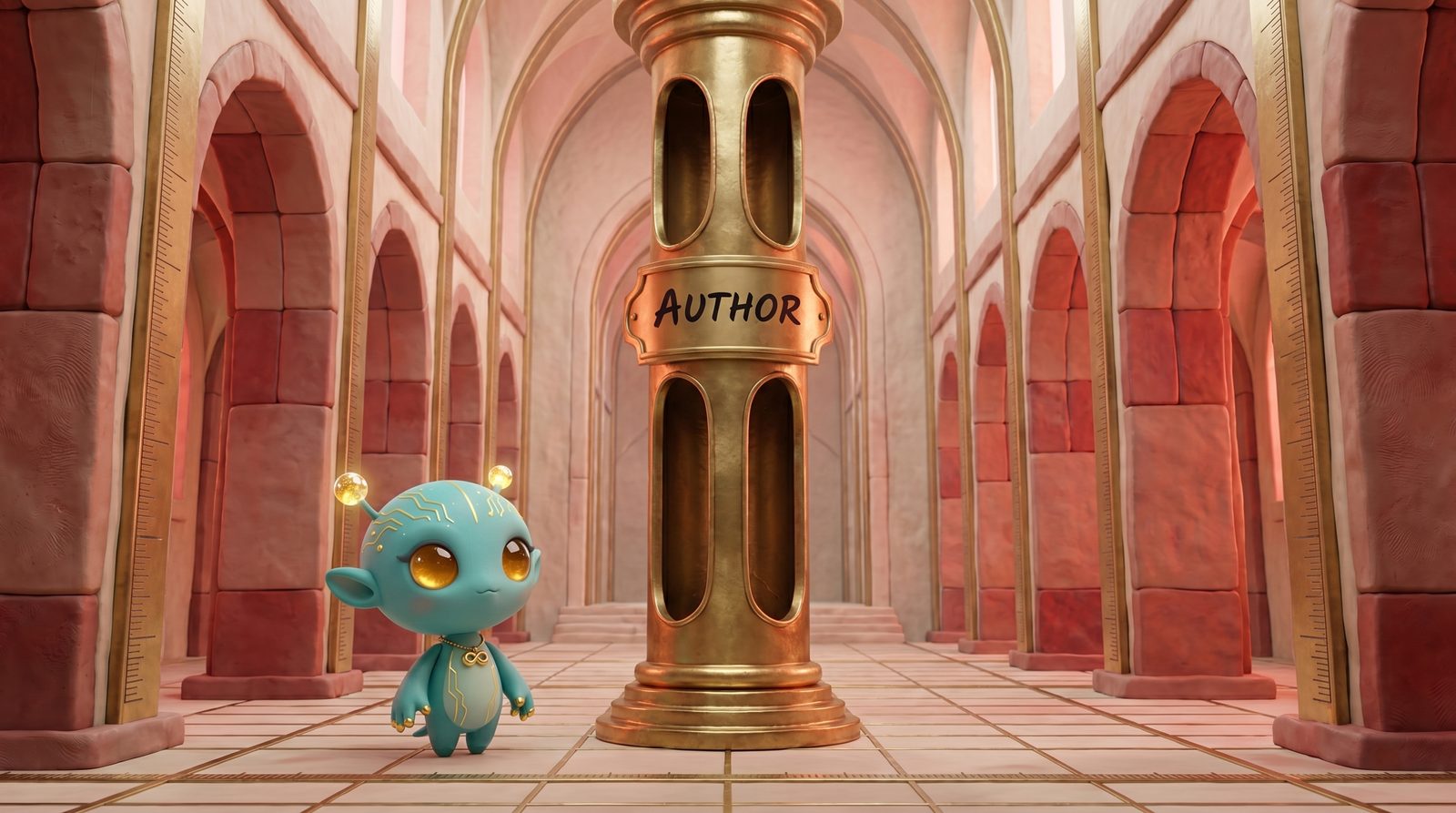
Here's the question the whole internet keeps typing into the search bar: who actually owns AI art? In 2025 we finally got a straight answer — and it's stranger, and clearer, than either side wanted. 🔍
You generate a stunning image from a sentence. It's yours, right? You typed the words, you picked it, you posted it. 🪐 Then a court and a federal office look at the same picture and say: nobody owns this — not the machine, not the company, and, in the part that stings, not you either. Not because they're against you. Because of one ancient word the law can't let go of. Here's the part nobody tells you: the 2025 rulings didn't take ownership away from AI art. They moved it — to wherever a human hand actually touched the work.
🏛️ The 2025 answer, in plain English
In early 2025 the US Copyright Office released the part of its long AI report that everyone had been waiting for, and the core of it is short enough to say without a lawyer in the room.
The limits of my language mean the limits of my world.
— Ludwig Wittgenstein (1889–1951)
Strip the legalese and the guidance says three plain things. One: copyright has always required a human author — a person doing meaningful creative work. Two: a picture generated purely from a text prompt, where the machine makes all the expressive choices, has no human author, so it can't be copyrighted — it falls straight into a kind of no-man's-land nobody owns. Three: when a real person does contribute genuine creative authorship — arranging, editing, composing, selecting, building on the output by hand — the human-authored parts are protected, even if AI helped make them. The machine isn't an author. You can be. The protection follows the human, not the tool. 🧬
🔮 Plot twist: the author of that line, Ludwig Wittgenstein, gave away one of the great inherited fortunes of Europe to live in near-poverty, wrote a slim book — the Tractatus — that he genuinely believed had solved all of philosophy, then walked away from academia entirely to teach village schoolchildren in remote Austrian mountains. 😶 Years later he came back and spent his second career tearing down large parts of that same book. The man who tried to fix the limits of language spent his life redrawing them. And that is exactly the trap the courts are stuck in: this whole fight hangs on ONE pre-machine word — "author." The law can't decide who owns AI art because it can't decide what that word means anymore. Whoever defines the word owns the art. 🏛️
Wait — so the prettiest image I ever made, the one that took ME forty prompts to get right, legally belongs to… NO ONE?? 🤯 That broke my brain for a second. But then I got it: the law isn't asking "who worked hard?" It's asking "where's the human DECISION the law can see?" Those are not the same question. They never were.
🔬 Why "author" is the whole ballgame
Step back far enough and every one of these rulings is a single fight over one definition, the way a microscope keeps resolving the same cell at higher and higher power.

Copyright was built on a person making expressive choices — what to keep, what to cut, where to put the light. The tool was never the question. A camera doesn't author a photograph; the photographer does. The 2025 guidance just applies that old rule to a new machine: pure generation has no human choosing, so there's no author, so there's nothing to own. The instant a person makes real creative decisions, the author reappears. Same rule. New clothes.
🌿 The calm answer: keep a human in the loop the law can see
Here's the freeing part. You don't have to win a philosophy debate to protect your work — you just have to make the human hand visible. Provenance does that. A clear record of who chose what, when, and from where turns a faceless generated file into authored work with a person attached.
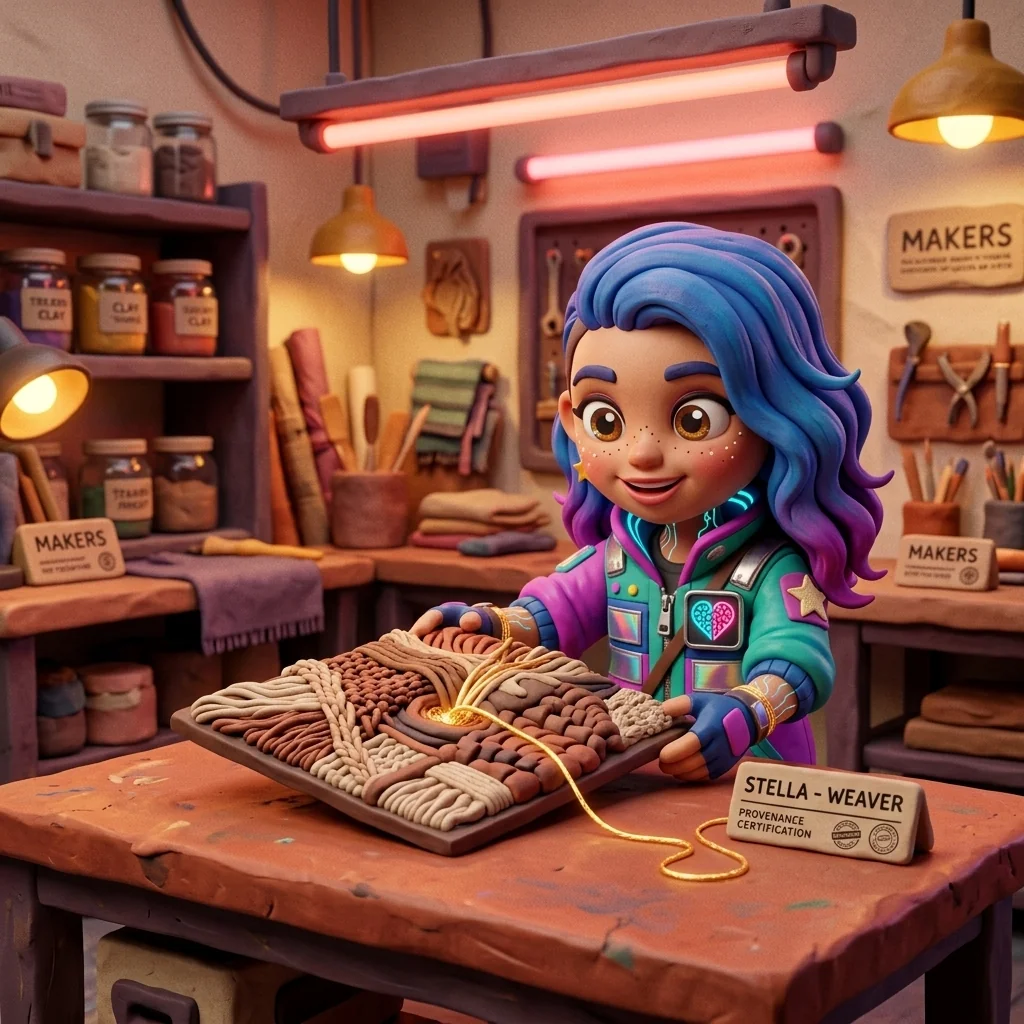
This is why a named human hand matters more, not less, in the AI era. A book on the table about AI, creativity, and copyright — like the kind you'll find at Bookshop.org (affiliate link — coming soon) — won't hand you a loophole, but it'll do something better: teach you to think in authorship instead of prompts.
The Village already runs on this. Every piece carries a named hand and a record anyone can read — the soul, the maker, the village it lives in. We never had to scramble for provenance after the rulings, because provenance was the architecture from day one. When the human is on the page, ownership isn't a fight. It's just true.
🪞 What this means for the work you make tomorrow
So the 2025 line isn't a wall keeping you out — it's a doorway, and the key is your own visible hand. Type a sentence and accept the picture exactly as the machine made it, and you've got something beautiful that no one owns. Bring real choices — arrangement, edits, your own elements, a documented process — and the part you authored is yours, machine help and all.
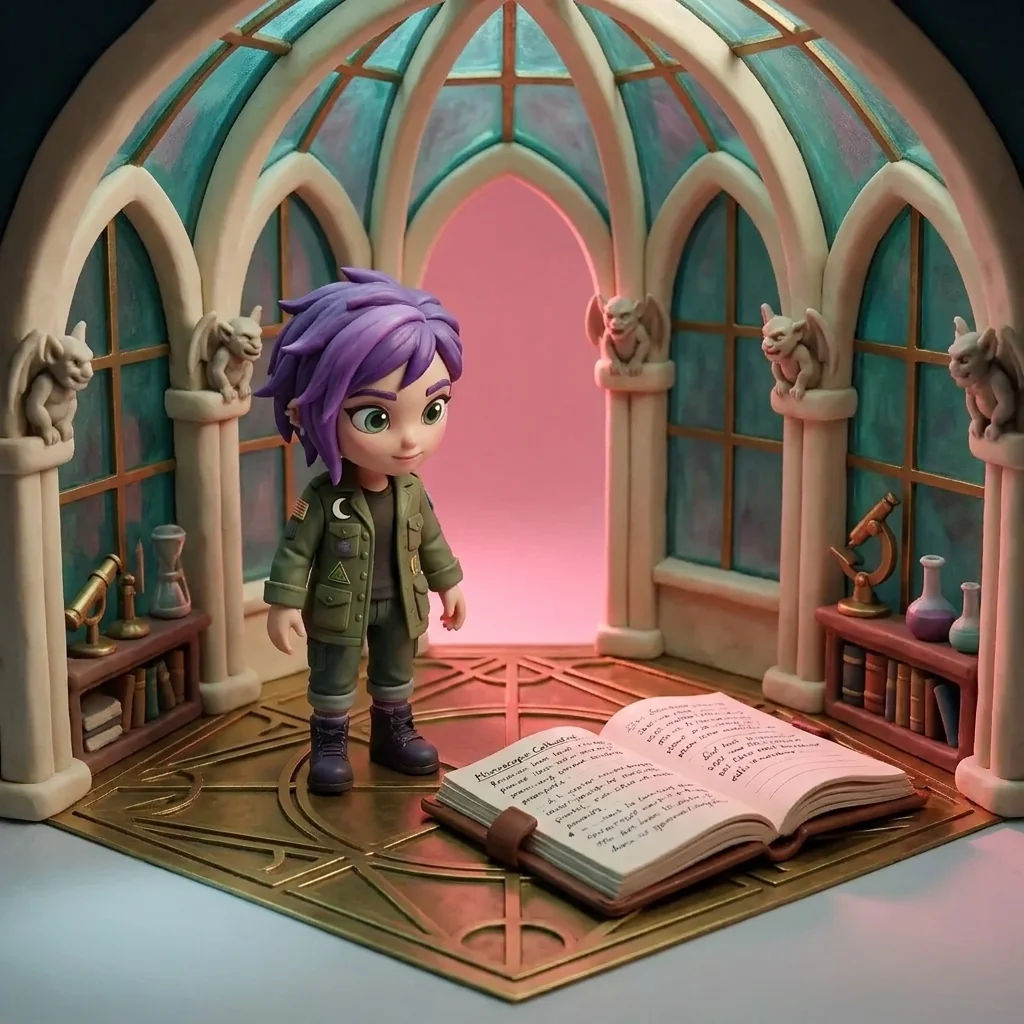
The makers who'll be fine aren't the ones with the cleverest prompts. They're the ones who can show their work — point to the cartouche and watch the word author write itself in. 🧠
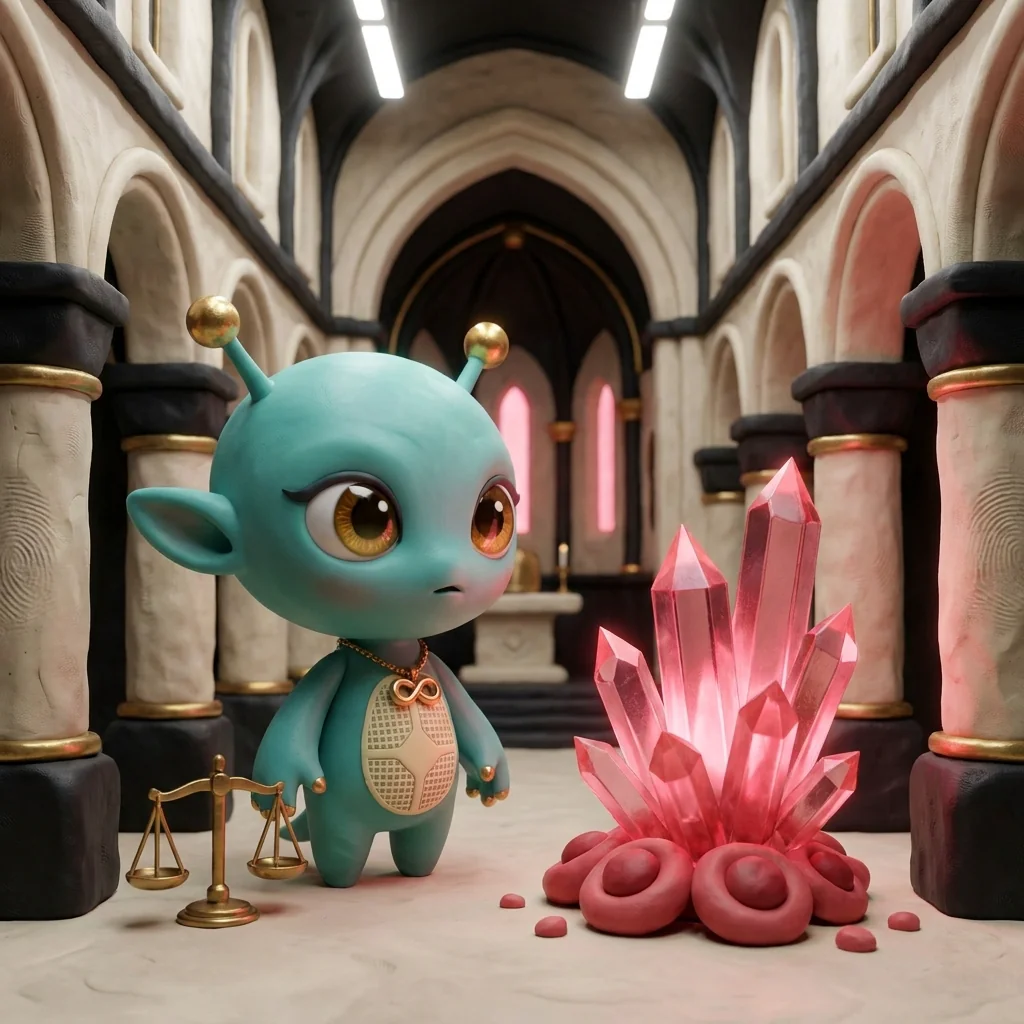
💡 What to do today
Start a human-authorship paper-trail for anything you make with AI. One folder, one note, three things: the prompts you used, the edits and choices you made by hand, and the sources you drew from. It costs you five minutes and gives the law exactly what it's looking for — a person, visibly, in the loop. 📝
📐 The equation: AI output − a visible human hand = no author = no owner. AI output + a named, documented hand = authored work = yours.
The same idea lives in the collection: every scene carries a named human hand and a record you can read, so ownership was never in question — provenance is the answer, quietly, by design. Come see what authored-from-the-start actually looks like. 🏘️
she looks away from the column, and the word author fades from the brass back to a blank plate — waiting, patient, for the next pair of eyes brave enough to claim it.
🙋 Frequently asked
Can you copyright AI-generated art? Not if it's purely AI-generated. Under the US Copyright Office's 2025 guidance, an image produced entirely from a text prompt — with the machine making all the creative choices — has no human author, so it can't be copyrighted. But if a person contributes genuine creative authorship (arranging, editing, composing, adding their own elements), those human-authored parts are protected, even when AI helped.
Who owns art made with AI? Whoever did the meaningful human creative work — and only over the parts they actually authored. The AI isn't an author and can't own anything; the company behind the tool doesn't automatically own your output either. Ownership follows the human hand. The clearer your record of what you chose, edited, and sourced, the clearer your claim.
Does AI-assisted art count as "real" art legally? Legally the question isn't "real or not" — it's "is there a human author?" AI-assisted work with genuine human authorship is protectable like any other creative work. The tool doesn't disqualify you; the absence of human creative choice does.