
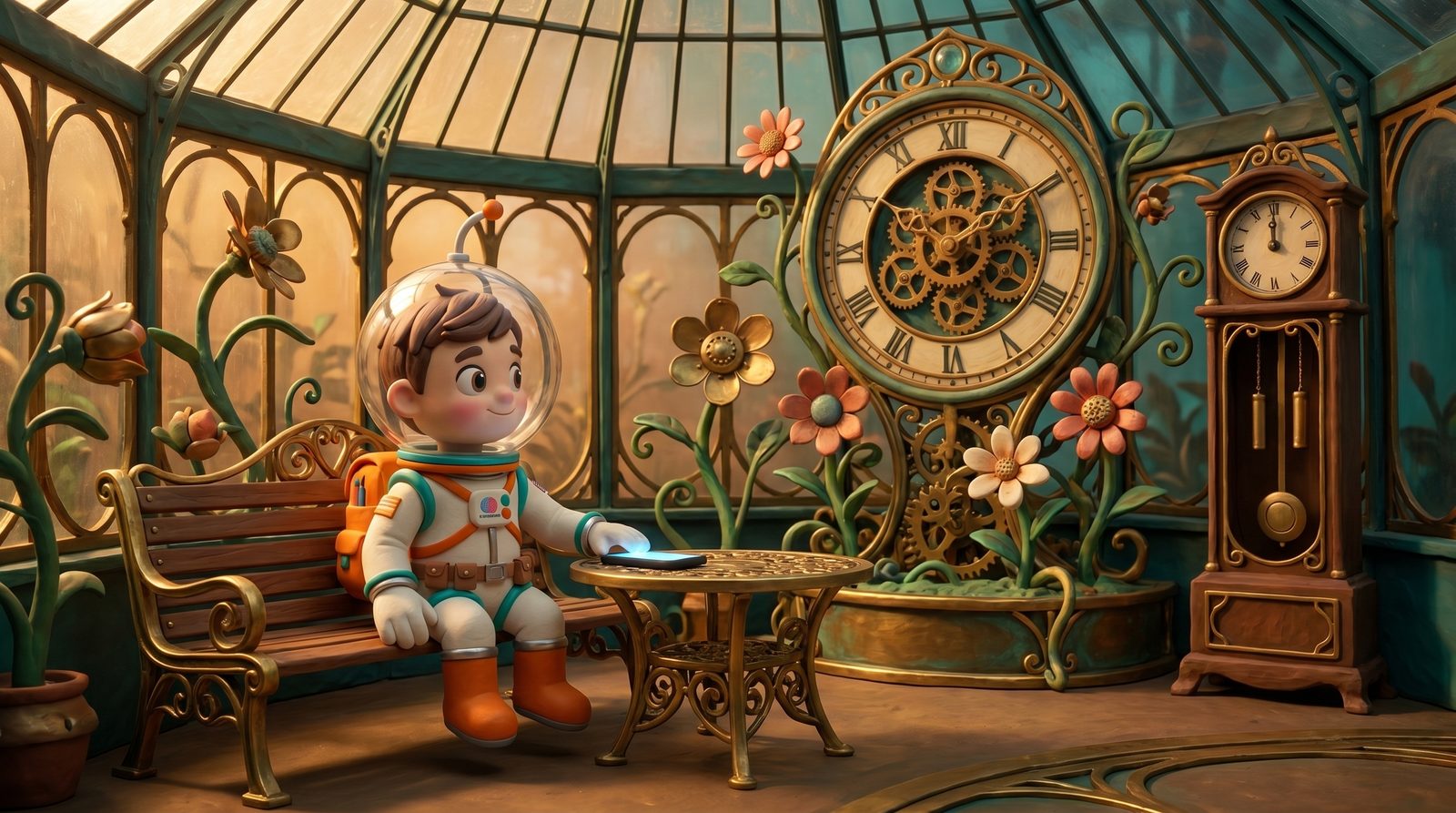
I checked my screen-time number this morning and had to put the phone face-down on the table. 📱 Not in shame — in math. Because the number wasn't really hours. It was days. It was a chunk of my one and only life, handed to a feed I can't even remember scrolling.
Here's the thing nobody tells you when they sell you "Stoicism" as airport-bookshop calm: the Stoics were not gentle. They were ferocious about time — about who was stealing it and how quietly the theft happened. Two thousand years before the infinite scroll, they had already diagnosed it. 🌀 So this is a Stoic's guide to not doomscrolling — a real one, for people who make things — and it starts with the sentence that ruined my evening in the best way.
⏳ The man who counted every hour
Seneca wrote a little book called On the Shortness of Life, and the whole argument fits in one line that has not aged a single day:
It is not that we have a short time to live, but that we waste much of it.
— Seneca (c. 4 BCE – 65 CE)
Read that twice. He's not complaining that life is short. He's saying it's plenty — you're just leaking it. And his examples sound eerily modern: people who pour their hours into other people's business, into noise, into things that feel urgent and leave nothing behind. He didn't have a phone. He had a Rome full of gossip, spectacle, and the endless errands of the rich. Same theft. Older tools. 🏛️
🔮 Plot twist: Seneca wrote gorgeously about despising wealth and never wasting an hour — and he was one of the RICHEST men in Rome. 😶 He was tutor and adviser to the emperor Nero, a moneylender on an enormous scale, fabulously wealthy off the very court life he warned against. And the same emperor he served eventually ordered him to open his own veins. The man who told us not to waste a single hour spent his hours serving the tyrant who, in the end, took all of them. So when you read him, you're not reading a serene monk. You're reading someone who knew, from the inside, what it costs to give your one life to a powerful thing while telling yourself you're in control. The feed is our Nero — and we are all, a little, Seneca on the payroll.
Okay I did the MATH and I had to sit DOWN. Three hours of scrolling a day — pretty normal, honestly — is sixty-three FULL DAYS a year if you count waking hours. Two months. Gone. Not to rest, not to making, not to people. To a feed I could not describe to you if you paid me. Seneca's been yelling this across two thousand years and I finally HEARD it.

🌀 The feed is engineered; your attention isn't free
Here's why willpower keeps losing. The feed isn't neutral. It's a slow main wheel that turns whether you watch it or not — except it's built to make sure you do watch, and keep watching, because your attention is the product being sold to someone in the next room. Every pull-to-refresh is a tiny slot-machine lever. That's not weakness on your part. That's engineering on theirs.
The Stoics had a precise word for the only thing that's actually yours: your prohairesis — your faculty of choice, what you assent to. Everything else (what happens, what's shown to you, what's dangled) is "not up to us." 🪞 The whole discipline is learning the border between the two — and the feed makes its living by smudging that border until a thing that is 100% optional feels 100% involuntary.
Notice the shape of it. Seneca's "robbers of our time" and the modern attention economy are the same machine wearing different clothes: both take the one non-renewable thing you own and convert it into someone else's profit. The Romans called them flatterers and hangers-on; we call them the algorithm. Same truth, different century. The technology isn't the variable — the theft is.

If you want the source straight from the man, the cleanest entry is Letters from a Stoic — Seneca writing to a friend, plain and human. The Libro.fm audiobook is a good one to put on while you walk, instead of the feed (affiliate link — coming soon).
🌿 Reclaiming the hour — the village version
Here's where the Stoics stop being grim and get useful. They didn't just diagnose the theft; they prescribed a practice. Seneca's whole pitch in On the Shortness of Life is that the busy are the ones with the least life, and the people who choose where their hours go are the ones who actually live long — because they live deep. Attention, spent on purpose, is the closest thing we have to making time.
This is the part we live by at Turbomindz. The opposite of doomscrolling isn't a stricter app-blocker — it's making something, however small. When you make, the hour leaves a mark you can hold. When you scroll, the hour leaves nothing. We're not anti-phone monks; we just believe the village gets built by people who put the thing down long enough to add one real brick. A pencil line counts. One frame counts.

A second Seneca line earns its place here, because it's the whole method in nine words: "Every day acquire something that will help you face hardship." He micro-engraved that idea into a daily habit — a small, deliberate deposit, every single day, no exceptions. Not a heroic detox weekend. A brick. Today's brick. ⚙️ That's the Clockwork Garden idea exactly: the mainspring turns regardless — duty as a steady beat, not a heroic sprint.
🛠️ Beat four: scrolling is consuming; the cure is making
The deepest Stoic move is this reframe: a feed turns you into a spectator of other people's lives, and the Stoics were merciless about the spectator. Watching is not living. The crowd at the games "wastes life watching" — Seneca's words, basically. 🎭 The antidote isn't more discipline. It's switching seats: from the stands to the workshop. From consuming the hour to making the hour into something with your fingerprints on it.
The trap is believing the scroll is REST. It isn't — I always stand up MORE tired and a little hollow, like I ate light for dinner. But ten minutes of actually MAKING a thing? I stand up bigger. Seneca nailed it: the busy spectator has no life, and the maker has all of it. The phone wanted my hour. I'm taking it back and putting a thumbprint on it.
💡 What to do today
One hour. Phone in another room — not face-down, another room, because face-down still wins. 📵 Set a real timer. In that hour, make one small thing instead of scrolling it: a paragraph, a sketch, a single clay figure, one verse, one fixed thing. It doesn't have to be good. It has to be yours, and it has to leave a mark the hour didn't have before. That's the entire practice. Do it once and you'll feel the difference Seneca was describing — the strange way a chosen hour feels longer than a stolen one.
And if you want the philosophy in your pocket, On the Shortness of Life on Bookshop.org is the perfect thirty-minute read — short on purpose, which is the joke and the point (affiliate link — coming soon).

📐 The equation: Attention × the feed = your hours, sold. Attention × your hands = your hours, kept.
Seneca couldn't take his own hours back from Nero in the end — but he left us the manual, and two thousand years later we still read him and not the emperor. The maker outlives the machine that fed on him. It always has. The same idea — slowness, a named hand, an hour spent on purpose — is the whole soul of what we make in the collection: each scene is somebody's reclaimed hour, with the fingerprints left in. No rush. Whenever it calls you.
she sets the phone face-down on the brass rail, watches the great wheel turn one full beat without her, and understands at last that it was never waiting for her to look.
🙋 Frequently asked
What would a Stoic say about doomscrolling? That it's a thief — the exact kind Seneca warned about in On the Shortness of Life. A Stoic would say the feed isn't shortening your life so much as leaking it, an hour at a time, into something that leaves no mark. The fix isn't shame; it's reclaiming choice (the one thing that's truly yours) and spending those hours on purpose — ideally making, not watching.
What would Stoicism say about phone addiction? Stoicism splits the world into what's "up to us" and what isn't. The phone's design — the pulls, the notifications, the infinite feed — isn't up to you; your assent is. The practice is the daily, unheroic deposit: one deliberate choice today, one tomorrow. Not a weekend detox you'll abandon, but a steady beat — duty as a mainspring that turns regardless.
Is "make something instead of scrolling" actually realistic? Yes, because it's small on purpose. The Stoic method was never grand gestures — it was Seneca's "acquire one thing each day." One paragraph, one sketch, one frame. The goal isn't to quit your phone; it's to take one hour back and leave a fingerprint on it. Do that once and the habit recruits itself.