A receipt proves you possess a thing. It does not prove you own it. 🕯️ You can hold the deed to a painting you have not truly looked at in nine years — and a stranger in the gallery can own it more completely than you do, in the four minutes she stands before it and forgets to breathe. So let me ask the small, slippery question under all of it: what do you actually keep, when you keep a piece of art?
There is a comfortable answer — the object, of course — and it falls apart the moment you press on it. Press on it with me.
🕯️ The pattern you recognize
Alfred North Whitehead spent the back half of a long life arguing that we have the furniture of reality almost exactly backwards. We think the world is made of solid things that occasionally do stuff. He thought it was the other way around — the world is made of happenings, and "things" are just slow ones.
Art is the imposing of a pattern on experience, and our aesthetic enjoyment is recognition of the pattern.
— Alfred North Whitehead (1861–1947)
Read that with a receipt in your hand. Whitehead does not say art is a pattern sitting on a wall. He says enjoyment is recognition — a verb, something you do, here, now, in your own one perishing minute. The painting is the imposed pattern. The owning is the recognizing. And recognizing is not a thing you can store in a vault. It only ever happens live. 🫀
That's the question this whole post answers, plainly: to own a piece of art is not to hold a fixed object — it is to keep a relationship with a pattern, a relationship that is always happening. The receipt records possession. The participation is the ownership. And the only ownership that was ever fully real is the kind you keep choosing.
🔮 Plot twist: Whitehead argued that reality isn't made of static things at all — it's made of what he called "occasions of experience," tiny events. Even a rock is not a thing; it's a society of happenings, a slow crowd of moments holding their shape. 😶 Which means "owning" a painting is, strictly, a category error — there is no fixed object sitting still to be possessed. There is a relationship between you and a pattern, and that relationship is always happening. Ownership isn't a noun. It's a verb. The deepest honest answer to "what do you own?" is "a process I keep choosing to participate in" — which is exactly what a vow, or a marriage, formalizes. ⏳
⏳ Beat one: the rock that is a verb
Sit with the rock for a second, because it's the strangest part. 🪨 The thing in the world that looks most like a static, ownable object — a stone, a slab of oak, a framed canvas — is, in Whitehead's reading, just a procession of moments going by slowly enough that we mistake the procession for a possession. Nothing in the room is standing still. Everything is passing through itself.
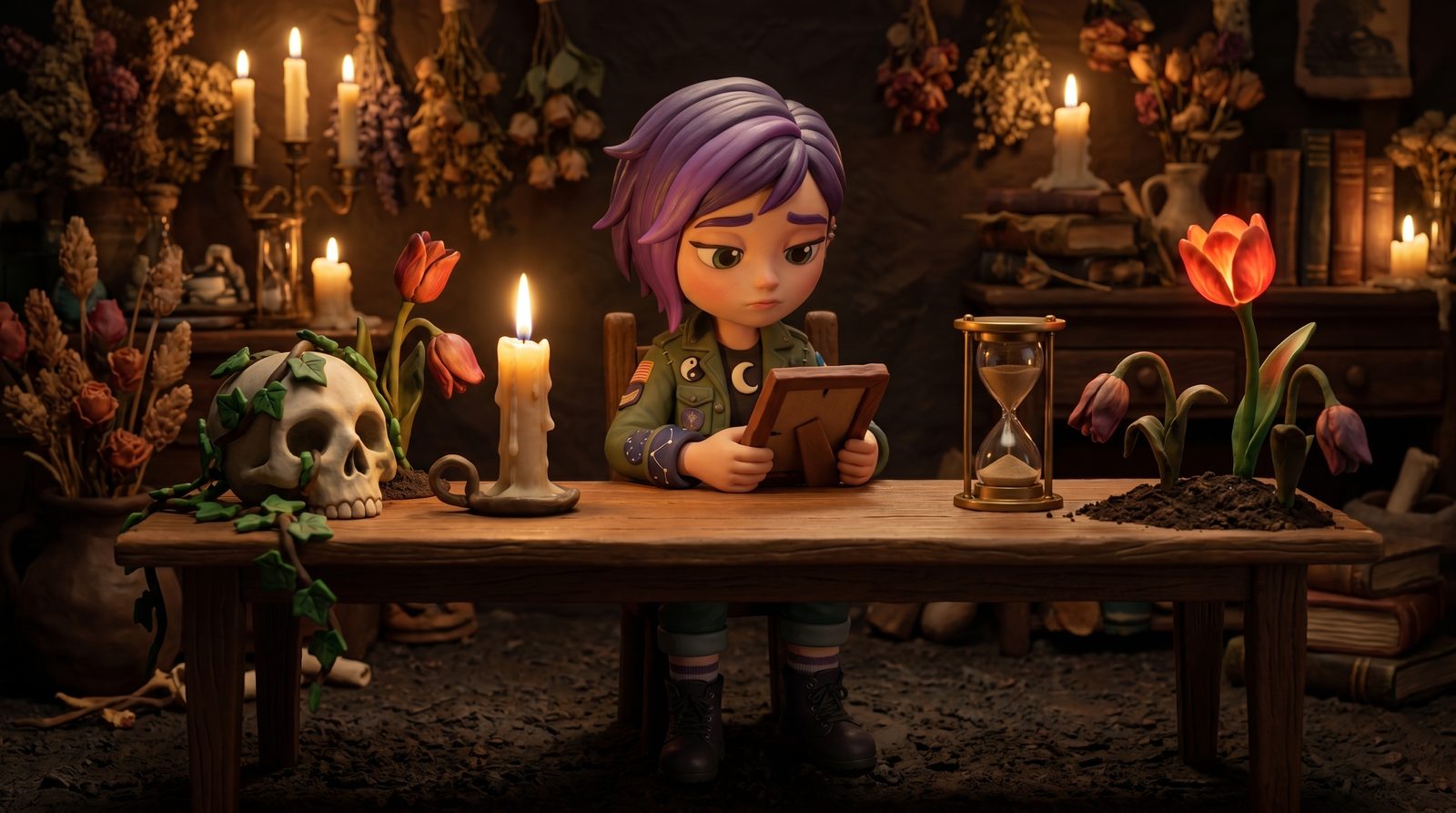
Wait wait wait — the SKULL on the table isn't a thing, it's a SOCIETY?? A little crowd of moments all agreeing to look like a skull right now?? 🤯 Then the painting I "own" is doing the same trick — it's not sitting there, it's HAPPENING there — and so am I, and the owning is... us happening at each other?!
This is why a candle is the honest model for ownership, and a vault is the dishonest one. A vault says: the thing is finished, sealed, kept. A candle says: the thing is happening, and you are watching it happen, and that watching is the whole of what you have. 🕯️
🪞 Beat two: having versus being
Here is where it turns from clever into useful. There are two completely different relationships we both call "owning," and we let the word hide the gap.
Look at the structure, not the word. Having is a claim on an object: the deed, the receipt, the row in a ledger — possession at a distance, true even while you sleep. Being-with is a claim made of attention: it only exists in the minutes you actually spend recognizing the pattern. Same word, opposite logic. One is stored and forgotten; the other is the only one Whitehead would call real — because it's the only one that's actually happening.
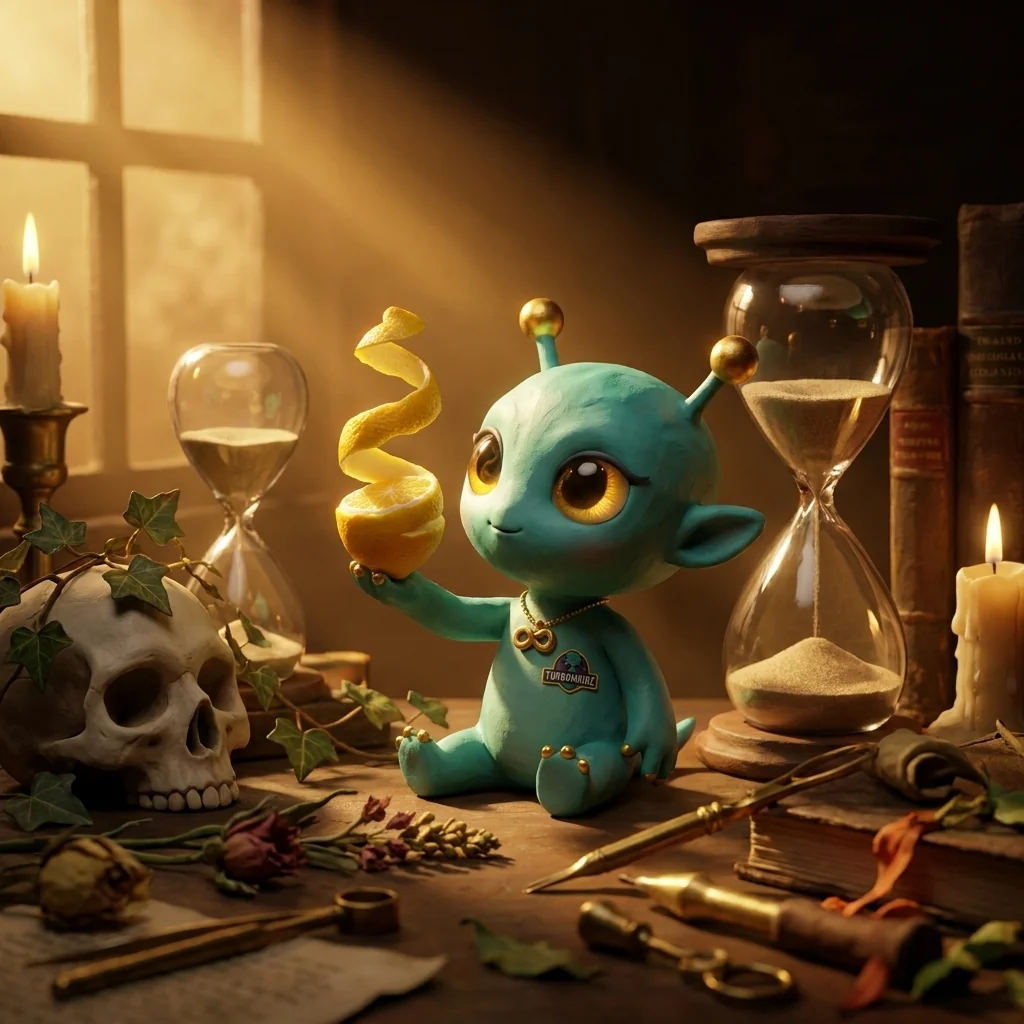
The painting hoarded and never seen is had. The cheap print a grandmother looked at every morning until the day she died is owned. The market only knows how to price the first one. Whitehead, and your own memory, both know which one you'd run back into a burning house for.
🏘️ Beat three: the village makes recognition keepable
So if real ownership is recognition — a verb, a relationship that's always happening — then it has a problem. Verbs don't last. The minute you stop attending, the owning stops too. How do you keep a thing whose entire nature is to be happening?
The same way humans have always kept anything made of attention. You witness it. You name it. You bind it to something that stays.
That's what a village is for. 🏘️ A vow isn't paperwork — it's a promise made out loud, in front of people, so the relationship has a body and witnesses and a record. We don't try to freeze the recognizing; that can't be frozen. We give it somewhere to live: one token (the soul), one artwork you made by hand (the body), and the village that watched you make it (the witnesses), all named on one record. The happening keeps happening — but now it's kept.
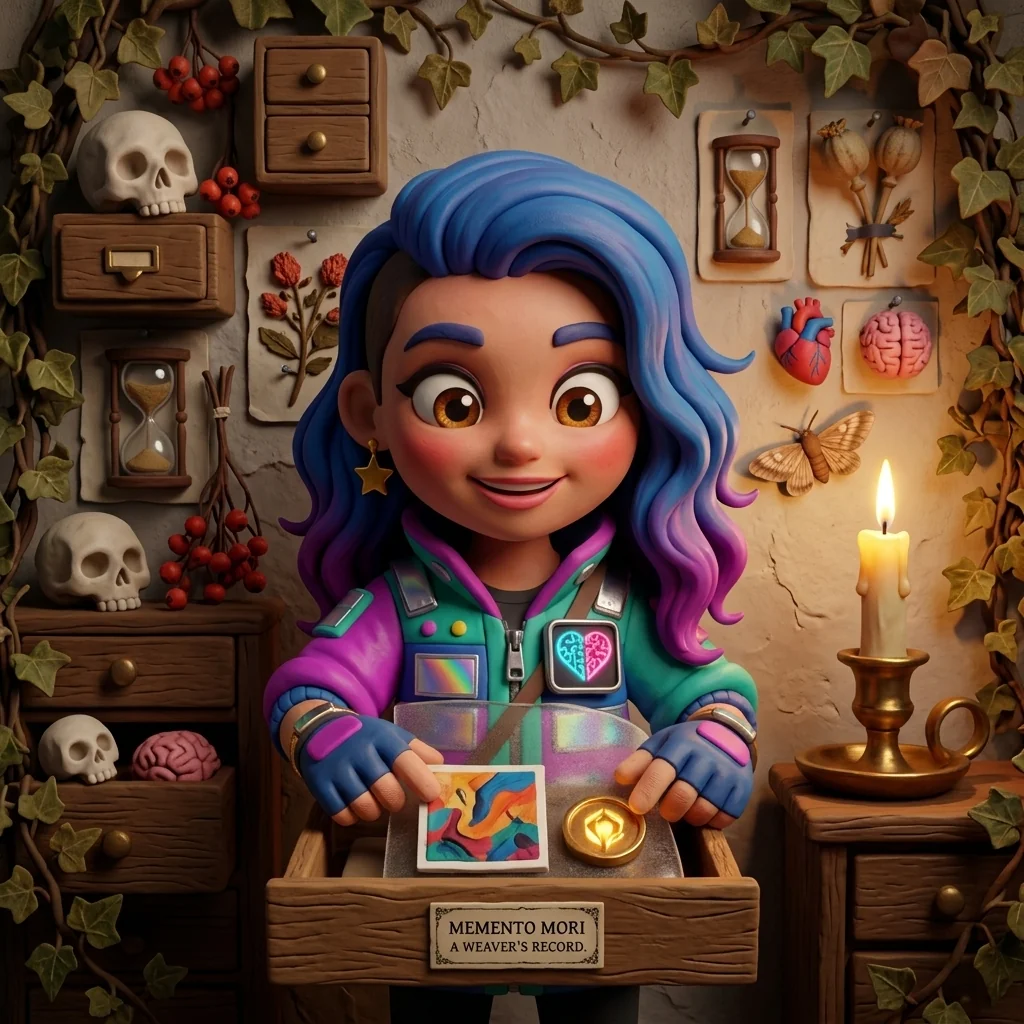
This is the quiet engine under the Turbomindz marriage system, said plainly: it does not pretend to sell you a frozen object. It formalizes the relationship. One NFT bound, for life, to one physical artwork the holder creates — witnessed on-chain — is a vow shaped exactly like the only kind of ownership that was ever real. Not "here is a thing, it is now yours." But: "here is a process, and the village will remember that you chose it." 💍
🥀 Beat four: what stays
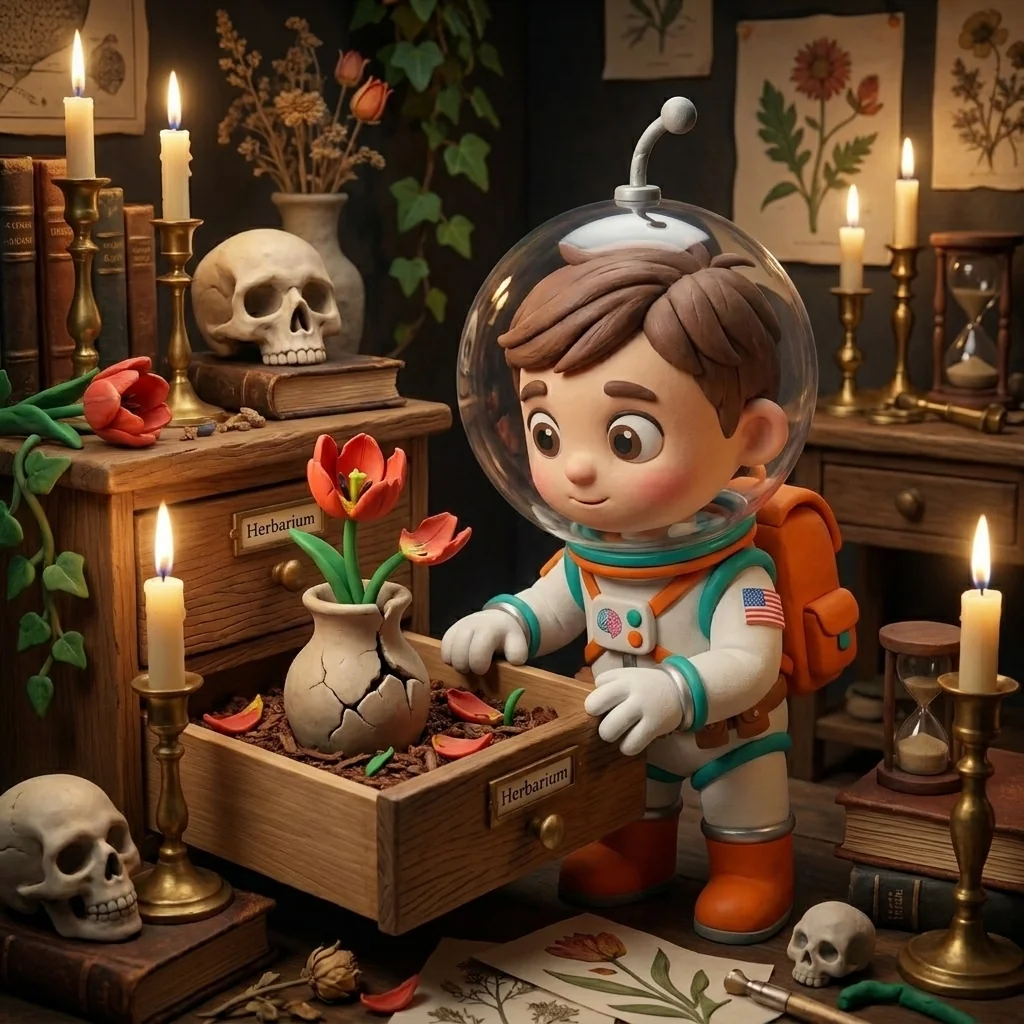
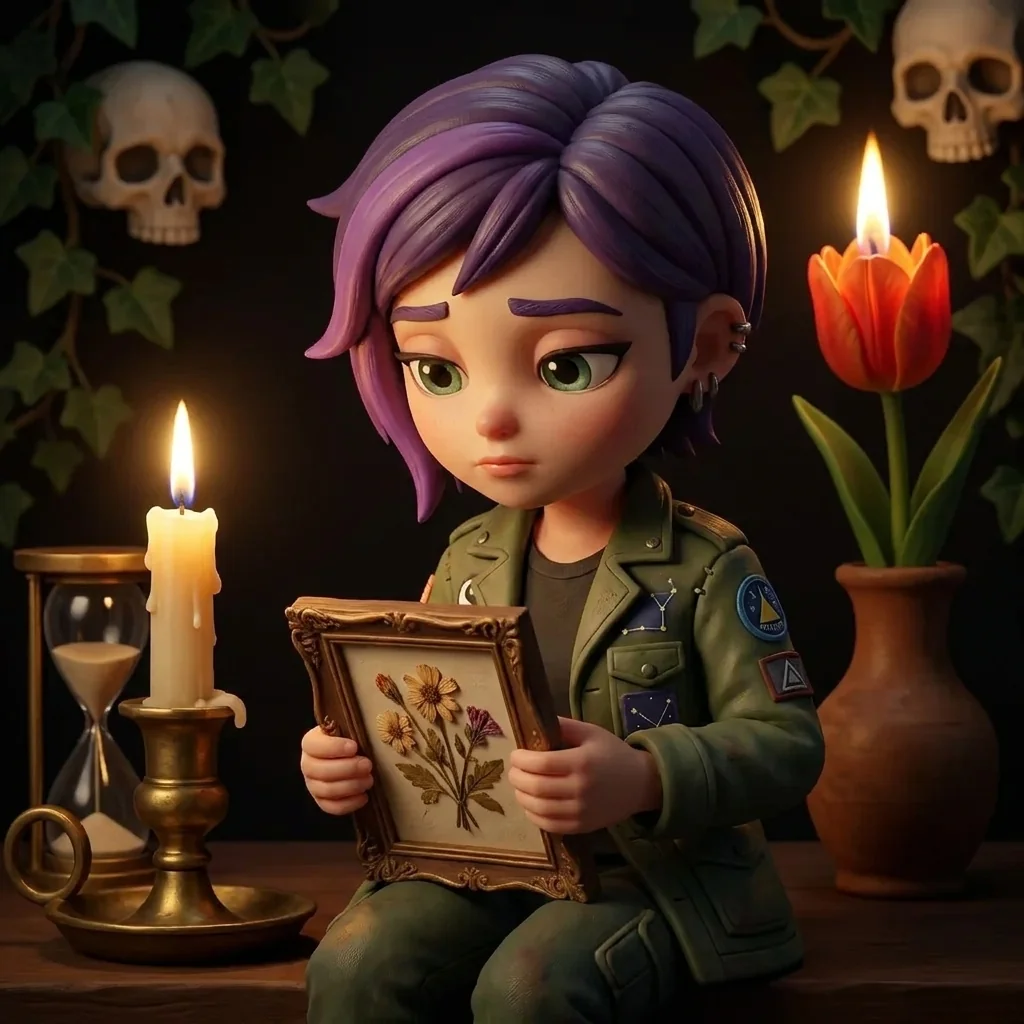
Here is the part the receipts never record. The tulip on the table is wilting as you read — petals curling, the vermilion cooling toward the dark. In this room nothing simply dies; each shattered bloom softens and feeds the next shoot in the same vase, every flower passing through its whole life at once. That is Whitehead made literal: each moment perishing to become the start of the next. 🥀
You cannot own the bloom. It is already leaving. What you can own — the only thing — is the recognizing of it, the minutes you spent actually there. That participation doesn't get vaulted. It gets remembered. And the things we build to remember it — a vow, a witness, a name on a record — are not how we freeze the art. They're how we keep faith with a relationship we already know we can't hold still.
💡 What to do today
Pick one thing you "own" — a painting, a print, a photo, a token, anything — and spend five real minutes simply being with it. No phone, no caption, no resale tab open in your head. Just look until you start recognizing the pattern instead of merely confirming the object. 🕯️ That participation — that small, perishing, fully-present five minutes — is the only ownership that was ever real. Everything else is a receipt.
📐 The equation: Having − attention = a receipt. Being-with − a witness = a moment that leaves. Recognition + a vow + the village = ownership that stays.
The market will keep telling you that owning is a noun — a thing you grip, store, and resell. Whitehead, the wilting tulip, and your own best memory all quietly disagree. Owning is a verb. It is a process you keep choosing to participate in. The same idea lives in the collection — and in the marriage system, where that choosing is finally given a body and a name. Come sit with a scene in the collection, or read how the marriage makes the choosing keepable.
she sets the receipt down, picks up the small painting, and stays — and only then does it begin, quietly, to be hers.
🙋 Frequently asked
What does it mean to own digital art or an NFT? To own digital art is to hold a verifiable, on-chain claim to a specific work — a record of provenance and the right to relate to that piece as yours. But meaningful ownership is more than the record: it's the ongoing relationship of attention and participation with the work. The token proves possession; the participation is the ownership. In the Turbomindz model, that relationship is given a body — one NFT bound to one physical artwork the holder creates — so the bond is witnessed, not just stored.
Do you really own an NFT? Yes — and it's worth being precise about what "own" means. You hold a genuine, transferable, on-chain claim to that specific token; that's real possession, recorded publicly and provably yours. What a wallet can't capture is the deeper sense of ownership: the relationship you keep with the work over time. The honest answer to "do you really own it?" is "you own a process you keep choosing to participate in" — which is exactly why a vow, or a marriage that binds the token to a made-by-hand artwork, formalizes ownership better than a receipt ever could.
Is a relationship with art really "ownership," or just a nice idea? It's the older meaning, not a softer one. Long before deeds and ledgers, to own something was to be bound to it — answerable for it, in relationship with it. The receipt is the modern shortcut. The relationship is the original. Both are real; only one is the part you'd grieve to lose.